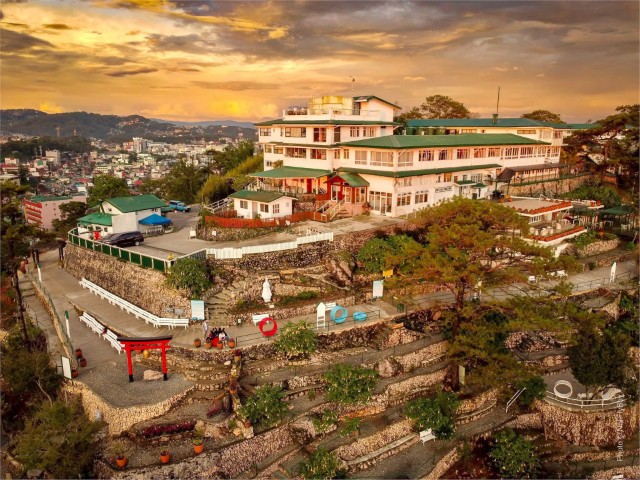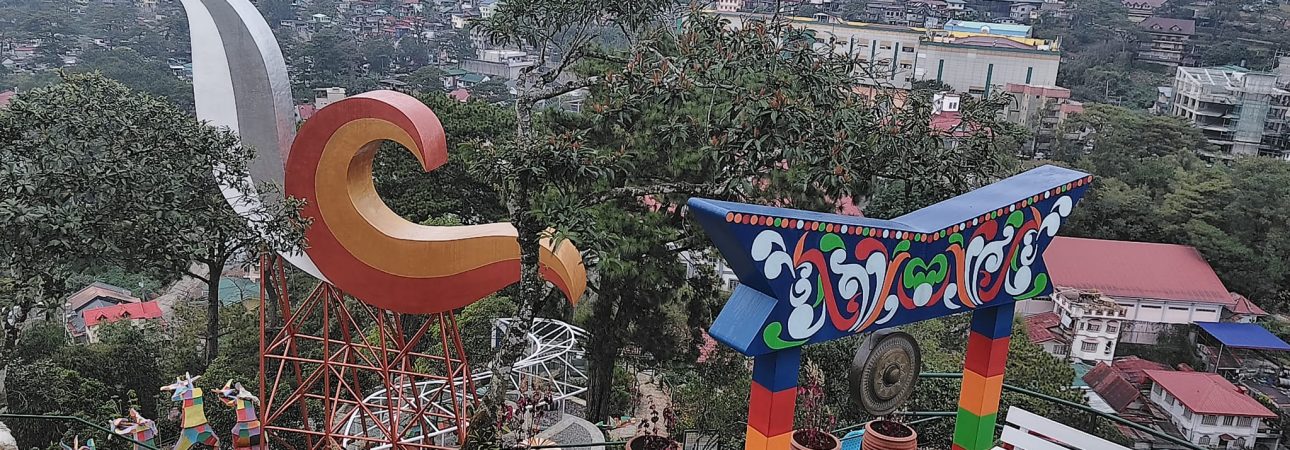
A day before the Salam Monument in the Mirador Jesuit Villa Retreat House and Eco Park is formally opened to the public, and I’ve already gathered so many layers to it!
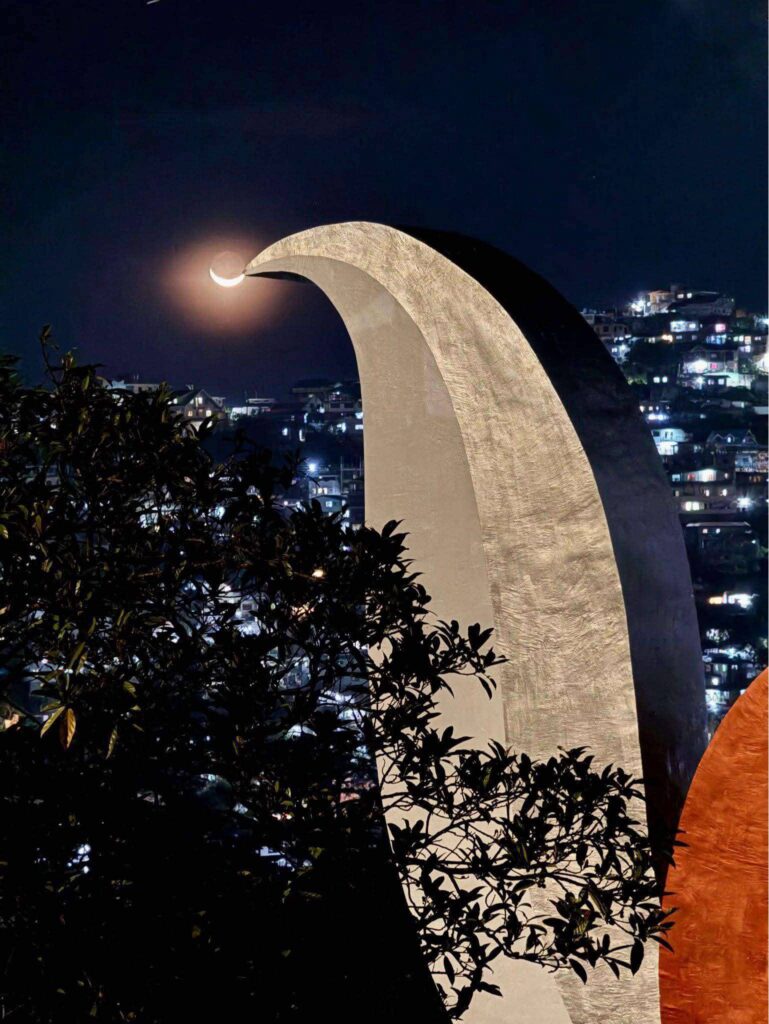
- Kublai considers it the most eloquent articulation of himself. In it he has made a monument take flight. It is both a demonstration of how he has evolved as artist, and the culmination of years of mastering form (it is his Lullabye taken to another level). Each monument is a battle against concrete and steel, and this time he has triumphed.
- A few years ago he shared to me the raison d’etre of his artmaking: to try to ‘capture the morning breeze.’ He has been trying for decades and has not succeeded. With this monument he feels like he finally captured it.
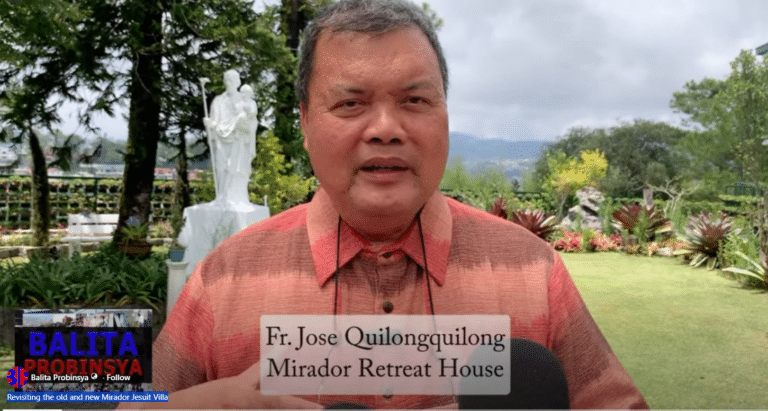
- Its position in Mirador cements its status as icon. Over breakfast, Fr Joe Quilongquilong explains that the word ‘icon’ is derived from the Greek for ‘window,’ each icon offering a vista into the divine. As such it complements Mirador, which already offers a breathtaking view of Baguio, by giving to people a glimpse into another landscape: one which is not visual but spiritual
- The design was originally intended to be for a project in Cape Town, South Africa, but the project did not push through. It has found a much more poignant home on these hills
- Understandably, Kublai is not comfortable just calling it a ‘Sarimanok.’ He is not even entirely comfortable calling it a bird – it is abstraction that suggests birdness, implying with it all the possible connotations of the avian that the space allows. The Sarimanok, the Ibaloi Kiling, the dove of peace, the holy spirit – it is none of these and all of these at once
- The trees surrounding the monument provide the appropriate auditory accompaniment – birdsong, specially at dawns and dusks
- (It is my own reading that there is an accidental pun. The monument is near the Peace Memorial: the Japanese word for bird is ‘tori,’ the Peace Memorial is in the shape of a torii)
- If anything, the monument is Kublai’s visual representation of gratitude. The root of the word ‘gratitude,’ Fr Joe points out, is the Latin ‘gratis,’ ‘a gift.’ The gift is necessarily undeserved, and one can never aim to repay the divine, just as the bird can only ever surrender itself before the winds that make it fly. But in many of the Philippine languages, the word for gratitude, ‘salamat,’ has roots in the Arabic word for peace – in this surrender to our utter inability to repay heaven, there is a sublime serenity
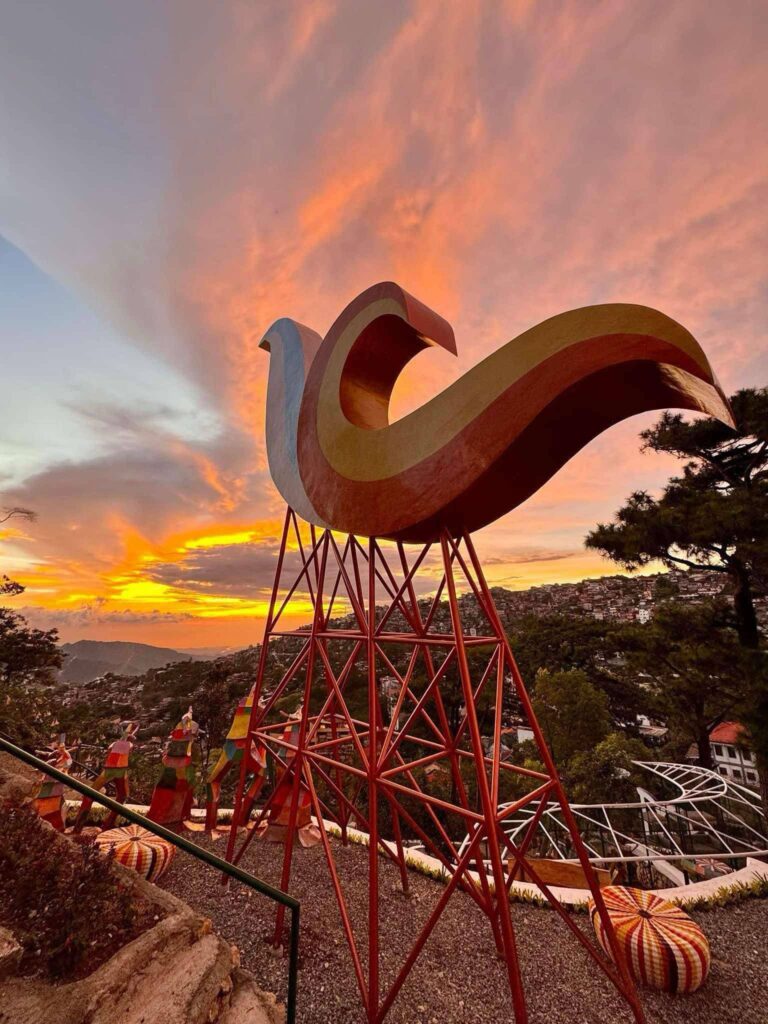
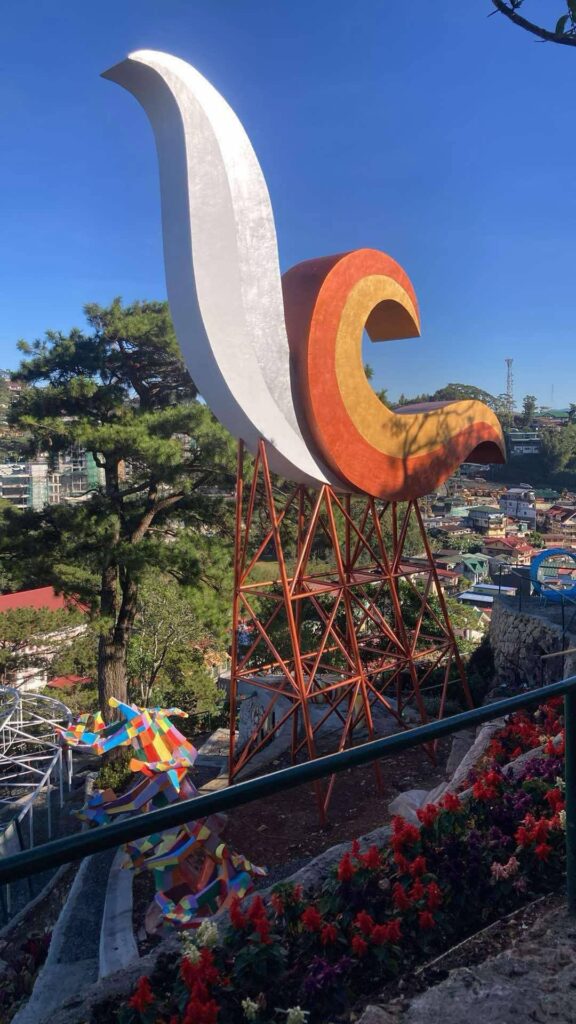
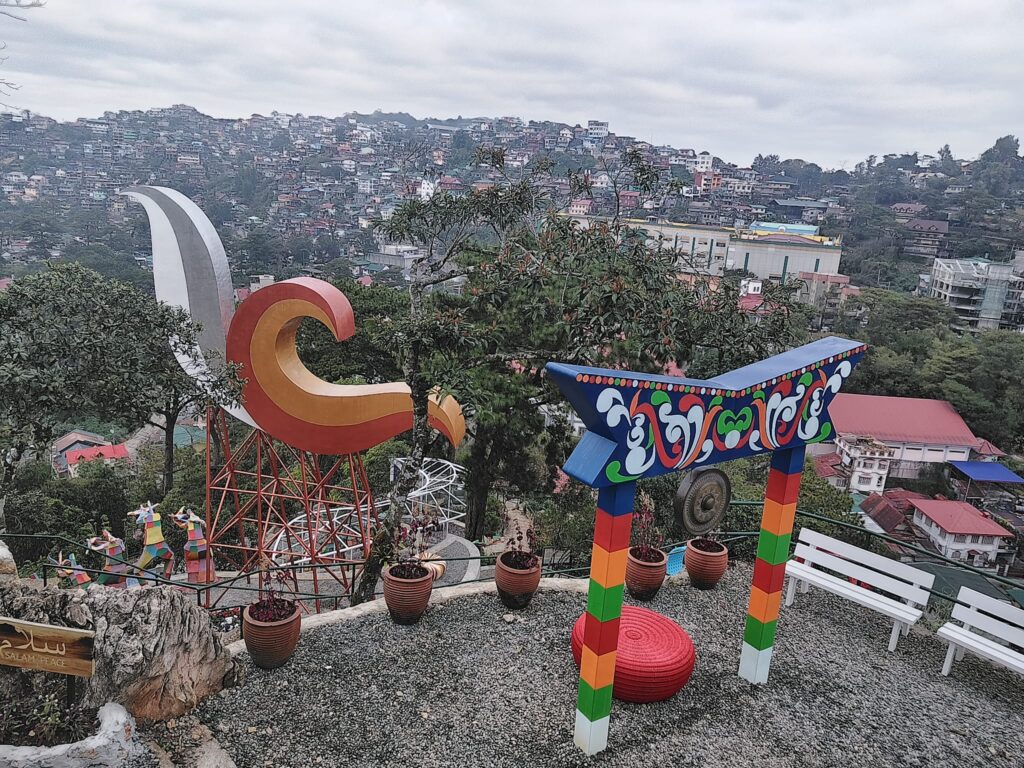
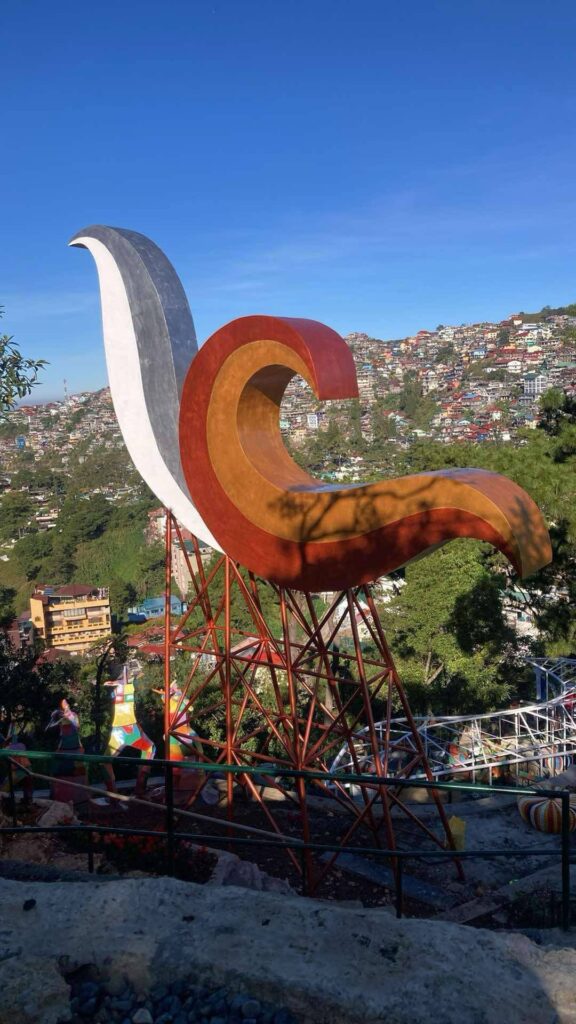
- What is a Mindanao work doing in Baguio? There are many layers of answer to this question. For one, there is actually nothing inherently Mindanawon about much of Kublai’s monumental work in Mirador. The visual motifs and colours may be reminiscent of Mindanao’s visual traditions, but they may well belong to other cultures too. They become distinctly Mindanawon because Kublai was behind them, and he always brings with him in his work the essence of his island, articulating with them the values and lessons of Mindanao that belong to the world. Provenance and association creates identity – historicity accumulates as essence over the surface of bare being
- (On a more basic level, Mirador is a Jesuit space, and heterogeniety – ‘pied beauty’ – is a key part of Jesuit aesthetics. The Mindanawon sits alongside the Cordilleran, the Japanese, and the American – glory be to God for dappled things!)
- For another, Fr Joe had in his heart in particular the large Meranaw population in Baguio. Apparently, many Meranaws who were displaced during the 2017 siege of Marawi moved here (I can understand why – Baguio feels like Marawi, though the lake in Burnham offering poor subsitute for the Ranaw). The monument – and the Al Salam Gardens – are his way of giving them space here in Baguio
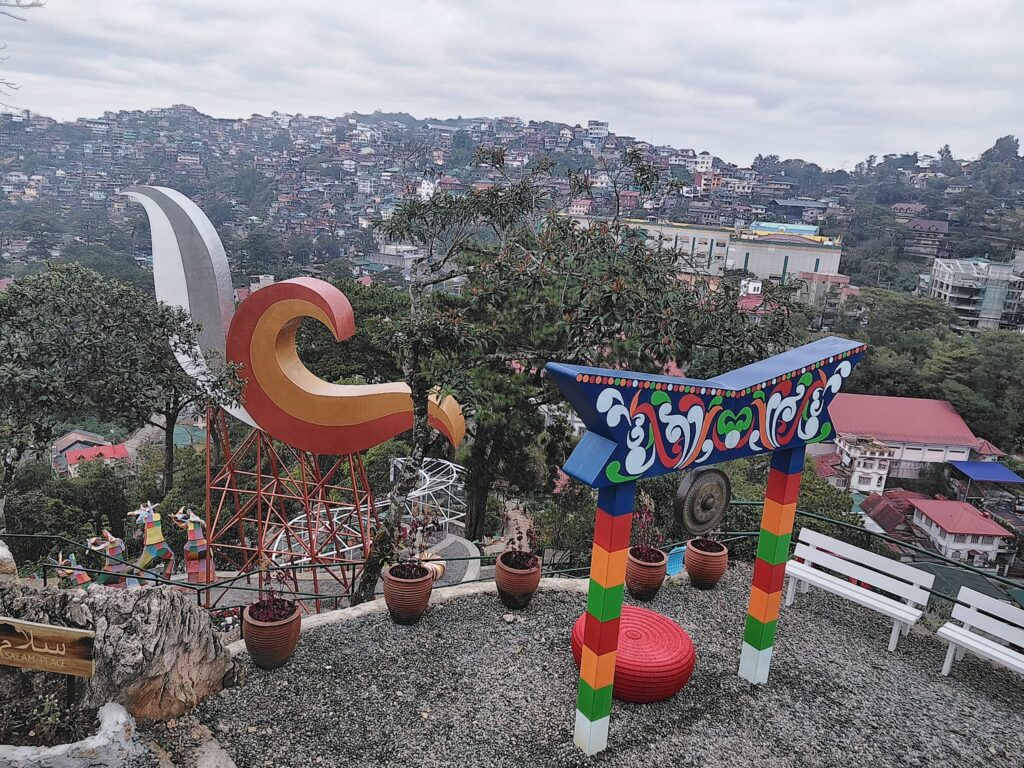
- The Gardens – including the monument – were deliberately made to face the Qibla
- Overcoming divisions and caring for one another, offering one another vistas into the divine, despite our differences like this: maybe (just maybe!) this is how, on this contrived postcolonial republic we call the Philippines, a genuine nation with a living deep culture can actually grow and thrive like the moss.
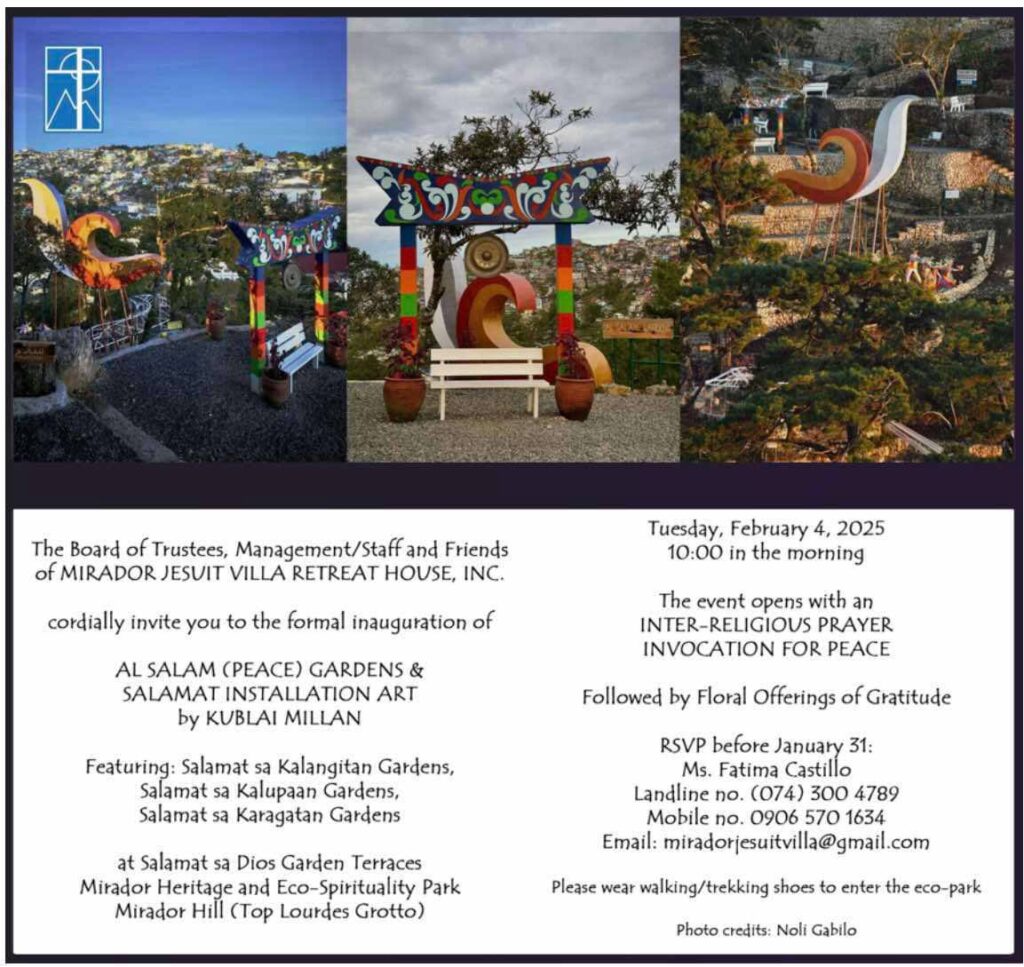
Al Salam Gardens and the Salamat Art Installation by Kublai Millan was blessed last Feb 4, 2025
View original post here